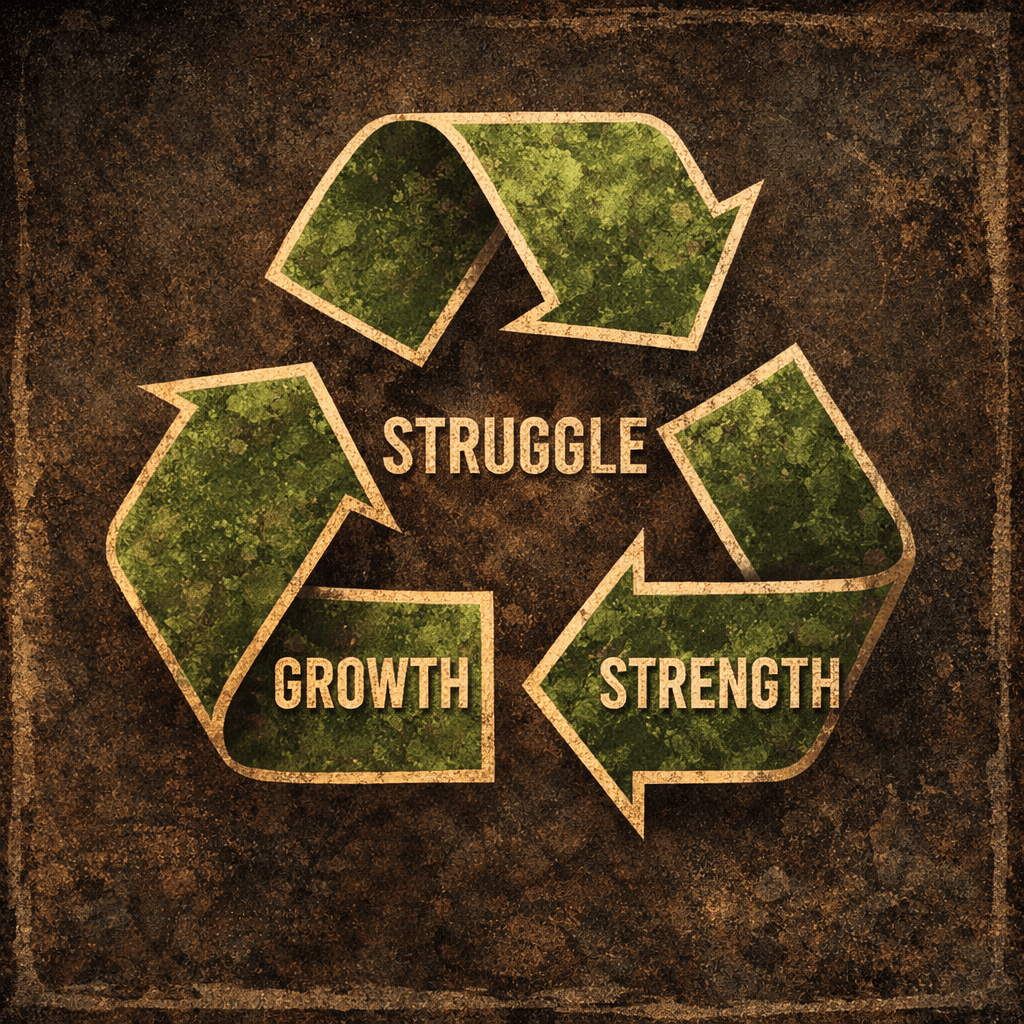
Some life lessons don’t come easy. You don’t plan for them, and you can’t train for them. They hit when you least expect it — and they change you in ways you don’t always see right away. The battles that shape us are rarely the ones we see coming. They’re the ones that knock us down when no one’s watching, when the crowd is gone, and it’s just you, the quiet, and the weight of it all.
At some point, I started paying attention to what other people had to say about failure — not the polished sound bites, but the raw, lived truth. Steve Harvey once said, “You have to lose your fear of failure. Failure is part of the process—people who never fail, never try. You have to fail. You’ve gotta get it wrong to get it right. You learn nothing from winning — you only learn from your failures.”
That idea hit me like a gut punch the first time I heard it. Because let’s be honest, failure sucks. It bruises the ego, dents your confidence, and makes you question everything you thought you knew about yourself. But over time, I’ve realized something: failure, especially when we’re already struggling, can be a teacher, if you stop running from it long enough to listen.
And that’s the thing about failure: it doesn’t wait for the perfect time. It shows up when you’re tired, when you think you’ve already made it through the hard part, when no one else is watching. It’s not personal; it’s life’s way of asking, “What will you do now?“
Looking back, I can see that every failure I’ve faced — every door that slammed shut, every plan that fell apart — was pushing me somewhere I wasn’t ready to go yet. I’ve faced plenty of those unseen battles along the way. Some I fought out loud; others I fought in silence. Some left scars. Others built calluses. But every single one taught me something about who I was and who I wasn’t. At the time, I only saw loss and frustration. But growth doesn’t show up wearing a name tag. It sneaks in through the cracks, disguised as disappointment, rejection, or delay. And if you can stay still long enough to feel it instead of fighting it, you start to realize something powerful: those moments weren’t breaking you down, they were building you up for what comes next.
There was a time after I hung up the uniform when I thought I was done fighting. The job was over, the noise had stopped, and the world told me to “move on.” But inside, the battle had just begun. I didn’t know who I was without the mission. I didn’t know how to sit still without waiting for the next call, the next deployment, the next crisis. So, I threw myself into things — work, distractions, denial — anything to avoid that quiet. And then, the failure came.
I failed at being present. I failed at being patient. I failed at relationships, at communication, at giving myself grace. And I hated it. Because for most of my life, I was the guy people leaned on when everything went wrong. Suddenly, I was the one who couldn’t keep it together.
It took me a long time to realize that it wasn’t weakness, that was growth trying to happen.
We like to tell ourselves we’re “resilient,” but I’ve come to despise that word. Resilience implies bouncing back to where you were, like the goal is to return to some version of yourself that existed before the pain, before the loss, before the change. But let me be honest — screw that. I don’t want to bounce back. Because when we “bounce back,” all the struggle we went through, all the lessons, all the late nights questioning everything, it ends up meaning nothing. We go through hell and come out pretending it didn’t happen. That’s not healing; that’s denial.
It reminds me of an old saying: “A man can’t step into the same river twice, because it’s not the same river, and he’s not the same man.” Once you’ve failed and walked through struggle, you don’t go back to who you were. You can’t. The current has changed and so have you.
When I started down my own path of posttraumatic growth (PTG), I realized how many of us — veterans, first responders, anyone who’s spent a lifetime serving others – carry invisible failures we never talk about. The missed opportunities. The moments we froze or lost control. The people we couldn’t save. The things we wish we could undo.
Those failures stick to you like armor that got welded to the skin. You can’t just peel it off. But here’s the thing, armor is heavy. Eventually, it stops protecting you and starts weighing you down. The only way to grow is to strip some of it away. And that’s where the work begins, not in bouncing back, but in rebuilding forward.
We talk about closed doors often in the Warrior community. Sometimes they’re literal; the career that ended too soon, the relationship that broke apart, the mission you didn’t finish. Sometimes they’re internal: depression, anger, guilt, shame, that haunting voice that tells you you’re never enough.
But failure isn’t the wall that blocks you. It’s the doorframe you have to push through. And here’s the thing: you will get it wrong sometimes. You’ll screw it up. You’ll fall. You’ll feel stupid. You’ll get knocked flat.
Good.
That’s how you know you’re in the arena. Failure is the test that separates wishing from working. It’s proof that you’re still trying. Still showing up. Still alive.
I used to think the goal was to get through the struggle as fast as possible; to skip the pain, the confusion, the doubt. But the more I’ve lived, the more I’ve learned that struggle itself is the path. It’s the gym where strength is built. You can’t train endurance without exhaustion. You can’t learn humility without falling short. You can’t find purpose without getting lost. Every scar you carry — physical, emotional, or invisible — is a reminder that you’ve already survived the things you thought would break you. And that means you can handle what’s coming next.
Struggle is a terrible thing to waste. Because on the other side of that struggle is someone you haven’t met yet, a version of you forged by fire, sharpened by failure, and anchored by growth.
When I talk to my brothers and sisters who are still out there serving, the ones who wear the uniform or used to, I see a pattern. We’re all terrified of being seen as failures. We were trained to win; to complete the mission, save a life, finish the shift, and bring everyone home. But life after service isn’t a mission you can plan or control. It’s messy. It’s uncertain.
And here’s what I tell them: You can’t “mission plan” your healing. You can only live it. Some days you’ll crush it. Other days, you’ll crumble. But either way, you’re learning to fight differently now — with compassion, patience, and self-awareness. That’s posttraumatic growth. Not pretending you’re fine. Not faking toughness. But redefining what strength even means.
PTG is different. It doesn’t aim to rewind the tape or pretend the struggle didn’t happen. Posttraumatic growth is about taking the challenges, failures, and pain you’ve lived through and using them to propel yourself forward. It’s saying, I’m not who I was before this — and that’s okay, because I’m even better. PTG allows you to take the lessons hidden in struggle and turn them into strength — from surviving to coping, living, and eventually thriving. It’s not about being unbroken — it’s about being stronger, wiser, and more whole because of what you’ve faced.
It’s like the story Dr. Abraham Twerski told about how lobsters grow. When a lobster feels pressure and discomfort inside its shell, it doesn’t numb out or wait for things to get easier; it sheds the shell and grows a new one. Struggle and pressure are triggers for growth. Without it, the lobster would never get any bigger.
We’re not that different. Discomfort isn’t punishment, it’s an invitation to grow. Just as the lobster’s growth is triggered by discomfort, human growth often arises from facing and navigating through life’s challenges. You can watch Dr. Twerski explain it in his short talk, “How Do Lobsters Grow?” Watch it here.
Remember, you’re not doing it wrong. You’re just in the part where most people quit. Keep going. Facing the struggle is where the one percent is made. Every step you take, even when it feels small, is progress. The pain, the struggle, the doubt; it’s all shaping you. Most people give up here, but if you push through, you’ll rise above the rest. Stay focused. Stay disciplined. Your breakthrough is closer than you think.
Here’s a challenge I have for you — one that’s simple but not easy:
For the next 30 days, take one small risk every day. Do something that stretches you just a little. Start a conversation you’ve been avoiding. Try a new skill. Apply for the thing you’ve been talking yourself out of. Or maybe admit where you’re struggling.
Each time you fail, write down what you learned, not what went wrong, but what it taught you.
At the end of 30 days, look back. You’ll see progress in the places where you used only to see pain. You’ll realize that struggle doesn’t mean weakness; it means movement. Failure doesn’t define you. It refines you.
When that day comes, when you catch yourself responding to life with more clarity, humility, and heart, you’ll know you’re not just surviving anymore. You’re growing. You’re evolving.
The next time you fall flat, remember this: it’s not a signal to stop. It’s an invitation to grow. Every warrior knows that scars aren’t signs of defeat. They’re proof you kept showing up. Don’t waste your struggle. Don’t curse your failures. They’re not the end of your story; they’re the proof that you’re still writing it.
Until next time, struggle well my friends, and remember, struggle is a terrible thing to waste; let it shape you, not stop you.
~ Grim



What are your throughts?