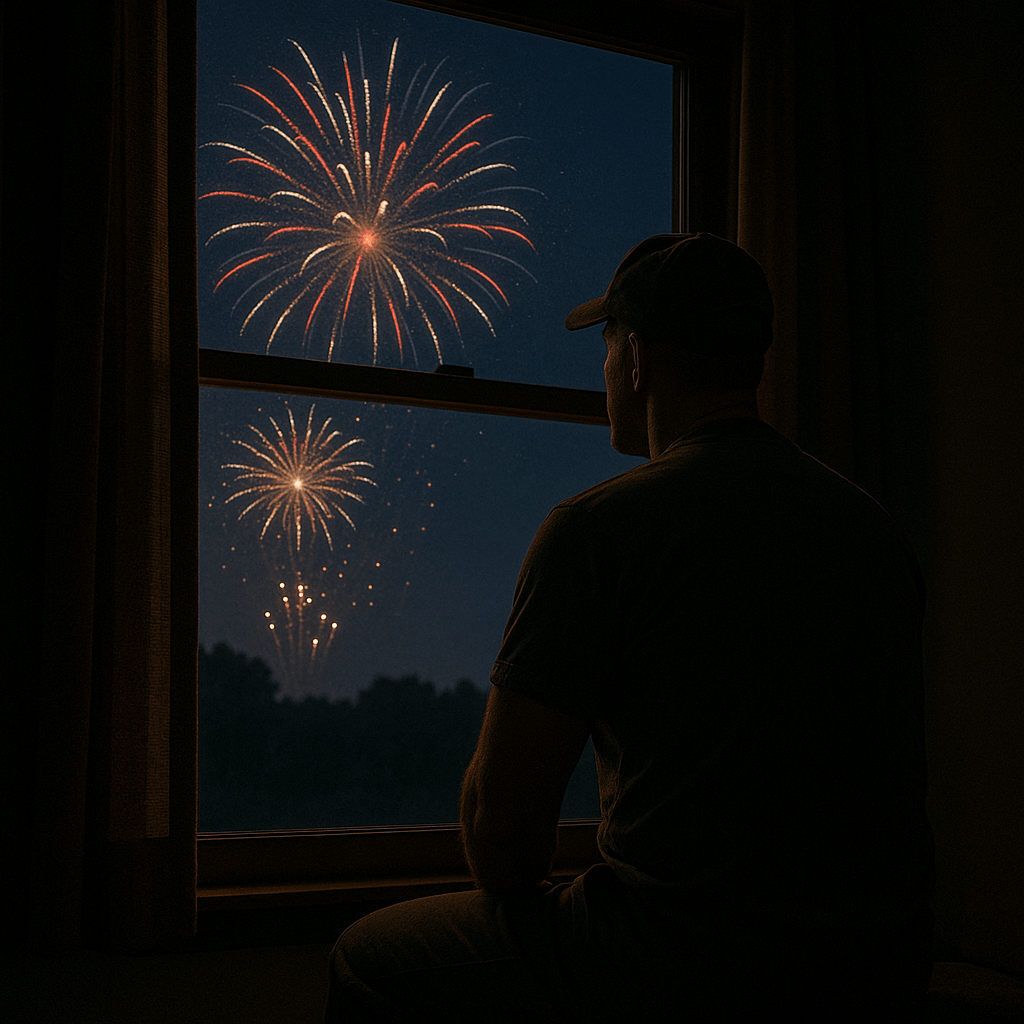
The Fourth of July means a lot of things to a lot of people. For most Americans, it’s a celebration; a day filled with backyard barbecues, small-town parades, and red, white, and blue decorations everywhere. It’s laughter in the sun, the sizzle of burgers on the grill, and the grand finale of fireworks lighting up the night sky while patriotic music plays in the background. People gather to celebrate independence, freedom, and the idea of what it means to be American. And to be clear, none of that is wrong; those moments of joy and unity are part of the very freedom we swore to protect.
However, for many of us who served, whether in foreign combat zones or here at home as first responders, the day carries a different weight. It brings memories that don’t always feel like freedom. Sometimes, those memories are filled with loss. Sometimes, they are filled with survival. And other times, they are just a numb, silent endurance that we’ve learned to live with.
You see, the freedom every U.S. citizen celebrates was paid for in silence — not the silence of peace, but the silence we carry when we come home; the silence of everything we don’t say about what we saw, what we lost, and what we still carry.
When Celebration Triggers Combat
Years back, I was walking out of a grocery store when a firework exploded a few blocks away. That sharp crack, that split-second thunderclap, hit my body before my mind could process it. My knees gave out, my heart jumped into overdrive, and suddenly, I wasn’t standing in a parking lot anymore.
In that instant, I was transported back to southern Iraq, where the days blurred into nights under the constant bombardment of rocket and mortar fire. The sharp whistle of incoming rounds still echoes in my mind. I remember crouching low in the dust, scanning the horizon, knowing it wasn’t if we’d be hit, but when. Every muscle locked into survival mode, adrenaline pumping as I calculated where the next blast might land. I wasn’t just trying to keep myself alive—I was responsible for making sure my people made it through one more attack, one more day.
But that was years ago; thousands of miles from home. Still, at that moment, it didn’t matter. The war didn’t care that I was standing on American soil now. Around me, people laughed, and kids pointed excitedly at the sky, but I just stood there—drenched in sweat, pulse-pounding—feeling like a ghost among the living. Eventually, I got back into my car and sat there for who knows how long before I could even start the engine and begin to make my way home.
Not the Only One
Unfortunately, I’m not alone in this experience. A Marine I know refuses to leave his house after sunset on the Fourth. Not because he’s ungrateful but because he spent too many nights in Fallujah under mortar fire. For him, fireworks aren’t a celebration — they’re triggers that bring back the faces of those he can’t forget.
Similarly, a firefighter I met lost two children in a house fire on July 3rd, five years ago. To this day, he still smells the smoke when fireworks start, and every bang feels like a call he can’t answer. He doesn’t watch the shows anymore — instead, he counts his breaths between each explosion to calm his heart.
Last, there’s a friend of mine who is a police officer, and he rarely speaks about the night he held a bleeding teenager in his arms after a drive-by shooting. That traumatic event happened on an Independence Day weekend and changed everything for him. Though he’s still on the job, that moment has lived beneath the surface, shaping every day since then.
These stories, and many more like them, don’t make the news. Yet they are very real and happen all around us.
We Don’t Talk About the Weight
For veterans like me, the silence often starts when we step off the plane. Handshakes come, parades roll by, and the “thank you for your service” comments stack up like small talk. While we appreciate those gestures, they don’t touch the parts of us that didn’t make it home — the parts still stuck in the blast, or rolling through intersections while on convoy duty, or better yet, still seeing the lifeless eyes of a fallen brother or sister in arms.
We are taught to stay quiet, to suck it up, to move on. As such, we bury it deep inside.
First responders share this silence as well. They don’t deploy overseas, but their battlefield is right here at home. In homes, alleys, back roads, on highways at 2 a.m., and school hallways that should never have needed triage. They answer calls that no one else wants to answer. They carry stories that no one else wants to hear. Yet, they are expected to return every day and act like nothing happened.
And so, they bury it, too.
Our Silence Isn’t Weakness — But It Doesn’t Have to Be Forever
For a long time, many of us believed silence was strength. We were taught that talking about the pain made us soft and that vulnerability was something to be ashamed of. We learned early, whether in uniform, in the firehouse, behind the badge, or on the battlefield, to compartmentalize and carry on. There was no time for tears, no space for reflection. We were needed. So, we did what we had to do: we buried the stories, the emotions, the losses, and we kept going.
But here’s the truth: silence is not a strength when it becomes suffering.
When you wake up in the middle of the night, drenched in sweat, your heart races at the sound of fireworks, snap at your family, and then feel ashamed — that’s not strength. That’s pain with nowhere to go. And when that pain stays locked inside, it festers. It steals joy, erodes relationships, and eventually convinces you that you’re alone in your struggle.
But you’re not alone. You never were.
Healing doesn’t begin by forgetting; it begins by finally allowing yourself to feel what you were forced to suppress. It starts when you stop believing the lie that asking for help is a sign of weakness and start realizing that it’s the first real act of strength you may have made in years.
In addition, healing doesn’t always look like a grand breakthrough. Sometimes, it starts with something small — a quiet decision to try. To breathe. To speak. To remember that you’re still here. You don’t have to fix everything overnight, and you don’t need to have all the answers. But if you’ve carried this weight alone for too long, maybe now is the time to set a little of it down. The truth is, you’ve already done some hard things and survived every one of them. Now it’s time to do something brave for yourself. Here’s where your healing journey can begin:
- Talk to someone who gets it. Whether it’s a fellow veteran, a first responder, or a trained peer-support coach, start with someone who speaks your language.
- Seek professional support. Some counselors specialize in trauma, moral injury, and combat stress.
- Write it down. Journaling gives your mind a safe space to unload what your heart has been carrying.
- Move your body. Physical movement helps release stored trauma.
- Join a group or retreat. Healing accelerates in a shared community.
- Unplug and reset. Step away from the noise (the phone, the news, the pressure) and find silence on your terms.
- Help others heal. You are in the best position to help others while honoring your own limits.
- Set boundaries. You don’t owe anyone your trauma. Protect your peace.
Remember to start small, but start today. One breath, one honest moment at a time. For those looking for ongoing support and real-life stories, here are two powerful podcasts (one for veterans and one for first responders) that can help you feel less alone on your healing journey:
- “Veteran’s Path,” (an older podcast) hosted by Jon Macaskill, offers raw and relatable conversations tailored for veterans helping veterans find peace, acceptance, transformation, and honor through practical tools like meditation and mindfulness, physical and outdoor experiences, and a community of camaraderie. (Cick here to listen now.)
- The “First Responder Wellness Podcast,” hosted by Conrad Weaver, is tailored for first responders and those who lead them. It focuses on mental health, wellness, and leadership solutions within the first responder community. (Cick here to listen now.)
Listening to voices that understand your experience can be a decisive step toward breaking the silence.
To My Brothers and Sisters Still Holding It All In
If what I have shared resonates with you — if your body still braces at the sound of fireworks, if your mind keeps returning to scenes you can’t erase, if you carry grief, guilt, or anger so deep that you stopped trying to explain it, I want you to know this:
You are not alone! You are not weak! You are not broken!
You are a human being who did extraordinary things; believe it or not, extraordinary things leave scars. You may have suffered in silence before, but you no longer have to. Some of us out there get it; we have been there and will walk with you back into the light. The cost of freedom doesn’t have to be your peace. This year, honor your service by caring for the one person you’ve always put last: yourself.
Reach out. Speak in the silence. It’s not just okay — it’s time.
This Fourth, Celebrate Loud — But Respect the Quiet
So, fire up the grill, raise your glass, and wave that flag high. You’ve earned your freedom. Just remember, while you’re celebrating, someone is remembering. While you’re lighting fireworks, someone else is reliving a moment they wish they could forget. While you’re free, others are still paying the price.
And many have been paying for it in silence.
Take a moment to honor them, not with pity, but with presence. And if you’re one of them, permit yourself to step back, breathe, and say, “Not tonight.” That’s not unpatriotic, that’s healing. Because true freedom isn’t just the absence of conflict — it’s the presence of peace. And that peace begins when we stop pretending we’re fine and start showing up for ourselves and each other. This Fourth of July, let’s honor independence and the quiet courage it takes to heal.
Until next time, struggle well my friends!
Grim


What are your throughts?