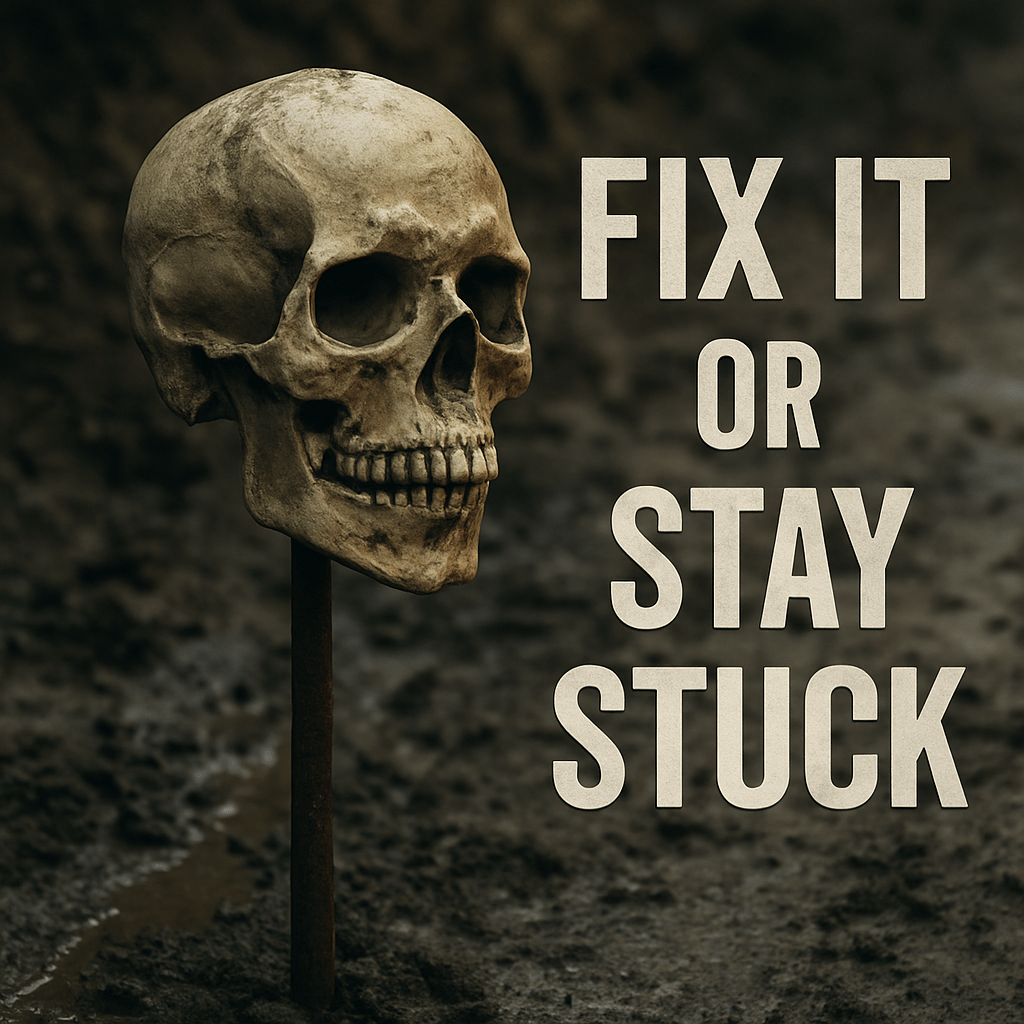
You’ve heard it. You’ve said it. It could even have become second nature. “It is what it is.”
It’s a phrase that gets tossed around in station houses, squad rooms, barracks, briefing rooms, the workplace, and around the home like some kind of universal truth. It’s supposed to sound like wisdom, like a hardened acceptance of reality. But can we be honest for a moment? It’s mostly nonsense.
Let’s face it: for first responders and veterans, this phrase has become a crutch, a default response when things don’t make sense, when the weight of the job gets heavy, or when life outside the uniform doesn’t go how we planned. But here’s the problem: “It is what it is” often doesn’t mean what we think it does. Sometimes, it’s a way to shut down a conversation that needs to happen. Sometimes, it’s an excuse to avoid taking action and a fancy way of saying, “I don’t want to deal with this.”
That’s dangerous. I know this because I’ve done it myself.
I used “It is what it is” as a way to accept what I saw in combat (not to mention what happened throughout my life) – because what was the alternative? Sit and dwell on things I couldn’t change? Let the images play on repeat in my head and spiral? No, thanks. It was easier to say, “That’s war. That’s the job. It is what it is.” And that worked. For a while. But here’s the thing: “It is what it is” didn’t stop the nightmares. It didn’t stop the anger from bubbling up over nothing. It didn’t stop me from pulling away from the people who gave a damn about me. It sure as hell didn’t make me any less haunted by the things I saw.
However, it did give me one thing: an excuse. An excuse to not get help, an excuse to not talk about it, an excuse to keep my guard up and pretend everything was fine. Because if I admitted, “It isn’t what it is,” it meant I had to do something about it. And that was terrifying.
I know I’m not the only one. Many of us, veterans, cops, medics, firefighters, and so on, carry things we’d rather not deal with, so we don’t. We slap “it is what it is” over the bleeding wound and pretend it’s not there, but deep down, you and I know better.
In our line(s) of work, accepting things at face value can be the difference between life and death. Whether you’re assessing a threat in the field, reading between the lines of a situation, or debriefing after a mission or call, the last thing you want to do is dismiss something without more profound thought. When we say, “It is what it is,” we often avoid asking why something happened, how we could have handled it differently, or what needs to change. That’s not toughness – that’s surrendering to circumstance.
Think about it; if we took this attitude into every aspect of the job, we’d never improve. Imagine a medic saying, “That patient died. It is what it is.” Or a firefighter saying, “That house burned down. It is what it is.” Or a veteran saying, “Combat messed me up. It is what it is.” Well, I am here to tell you that’s not how we operate. We break things down, learn from them, and find ways to be or do better next time.
So why do we stop thinking this way regarding our personal struggles? When we slap, “it is what it is” on our pain, our demons, or our mental health, we’re doing ourselves a disservice. We wouldn’t accept it on the job, so why take it in our own lives?
Growth comes from facing challenges, making adjustments, and learning from mistakes. When we use “it is what it is” as a go-to response, we cut off that process before it even starts. It’s a phrase that ends the conversation. It doesn’t invite problem-solving, reflection, or improvement; it just stops everything in its tracks. That could be dangerous.
Think about how many things in your life—your career, your relationships, your mental and physical health—could be better if you stopped settling for “it is what it is” and started asking, “How can I make this better?” Growth isn’t easy, but it’s worth it. And it begins by rejecting the idea that things have to stay the way they are.
Let’s face the facts: Most of the time, “it is what it is” isn’t about acceptance; it’s about avoidance. When we say it, we’re really saying, “I don’t want to deal with this.”
•”I keep having nightmares, but it is what it is.”
• “My relationships are falling apart, but it is what it is.”
• “I feel like a stranger in my own life, but it is what it is.”
We use the phrase to push things down, pretend they don’t bother us, and keep up the image that we have everything under control. But that’s a lie, and deep down, we know it. Avoidance doesn’t make problems go away. It simply buries them until they surface later, usually at the worst possible time.
You didn’t sign up for a life of passive acceptance. Whether you served in combat, ran toward burning buildings, faced down violent criminals, or fought to save lives in an ambulance, you built your life on action. So why do you suddenly throw up your hands and surrender when it comes to your own struggles?
• If something is broken, fix it.
• If something hurts, face it.
• If something isn’t working, change it.
That mindset is what got you through your most challenging days in uniform and will get you through whatever comes next. The moment you stop accepting “it is what it is” as an answer, you’ll start reclaiming control over your life.
You’ve faced too much, fought too hard, and overcome too many obstacles to start letting “it is what it is” run your life. That phrase doesn’t belong in the vocabulary of warriors, problem-solvers, or those who refuse to let circumstances dictate their future.
The truth is, it’s not about accepting things the way they are; it’s about deciding what happens next. It’s about realizing that you don’t have to passively take things, even the painful parts. The bullshit you’ve been told and the excuses you’ve made aren’t the final word. What happens next is.
As Ryan Holiday wrote in his book, The Obstacle Is the Way (click here to learn more), “The obstacle in the path becomes the path. Never forget, within every obstacle is an opportunity to improve our condition.” When we say “it is what it is,” we avoid that opportunity. We’re letting the obstacle stand before us rather than using it to move us forward. The moment we stop accepting things as they are, we start seeing obstacles for what they really are – chances to improve, grow, and reclaim control over our lives.
So next time you feel those words creeping in, ask yourself: Am I really okay with this? Or am I just afraid of what happens when I decide to change it? Because the truth is, it isn’t what it is. It’s what you make it.
Until next time, struggle well my friends!
~Grim



Leave a reply to Grim Cancel reply