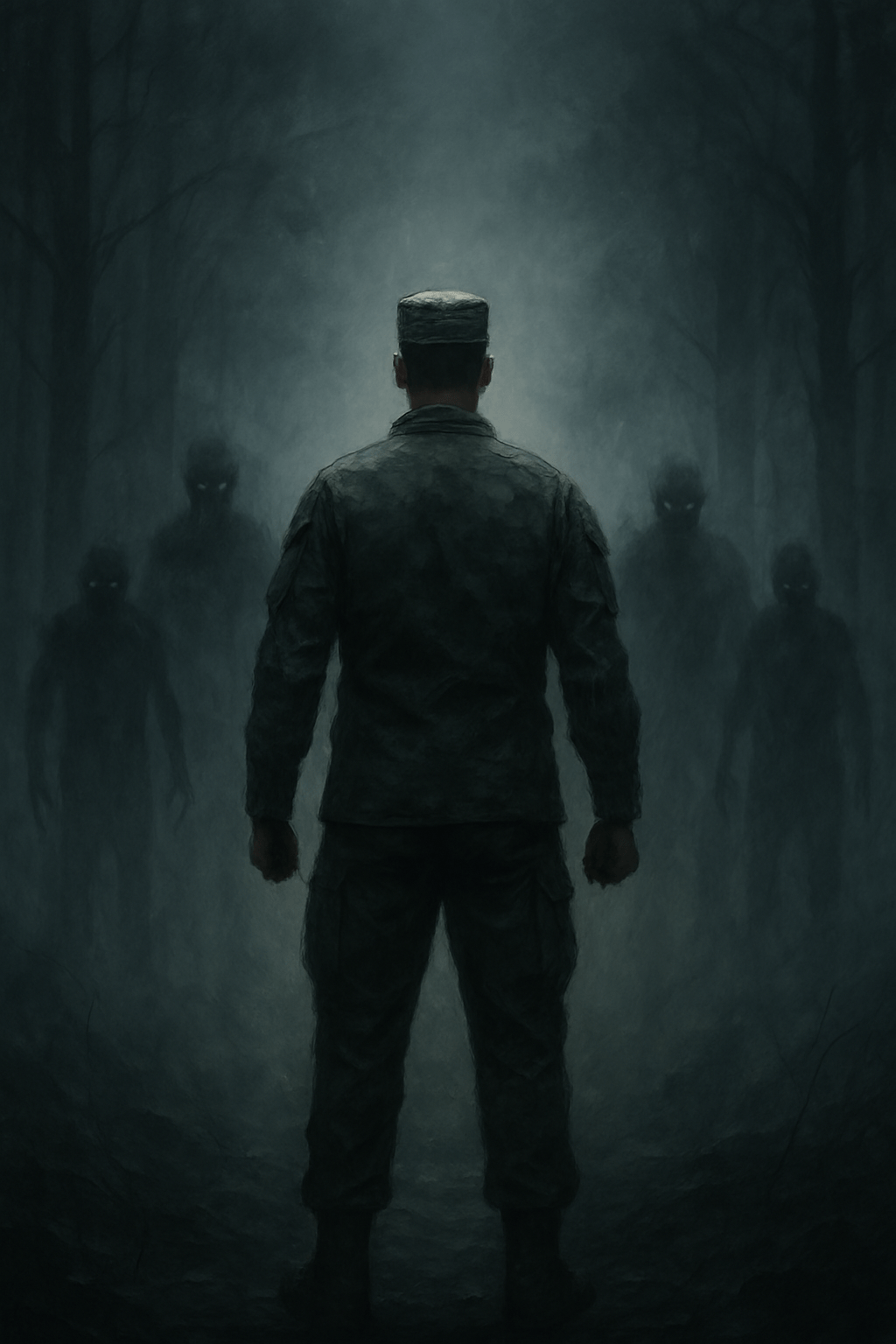
My mentor and best friend, Bill Whitt, once said, “The best way to fight the demons that chase you in the night is to stop, turn around, and face them.” The real fight isn’t running from the trauma you carry; it’s stopping long enough to face it. There’s a temptation to believe that if we keep moving, keep pushing, or keep pretending that everything is fine, the past will eventually fade into the background.
But the truth is, the harder we try to outrun our demons, the more they chase us. The pain, guilt, and fear we carry, often show up, when we least expect it – in the quiet moments, in the stillness of the night, when our minds slow down long enough for the memories to resurface.
I learned this truth the hard way. After my military career ended, I didn’t want to deal with what I had seen, done, felt, and lost. I stayed busy. I worked long hours, drank to numb the pain, and pushed people away – anything to avoid facing the weight I was carrying. But the harder I ran, the more relentless the demons became. They were always there – waiting, stalking, picking at the edges of my mind.
But there came a time when I had no choice but to stop running. I could no longer pretend. It was in those moments of stillness, when I finally stopped to breathe and let the weight of it all settle on me, that I realized something: the demons didn’t hold all the power. I did.
The Chase: What Are You Running From?
For almost 20 years, I couldn’t sleep without waking up in a cold sweat. Even when I was exhausted, my body and mind refused to rest. I would jolt awake, fists clenched, heart pounding, feeling like I had just escaped something – except I hadn’t. It was always there, waiting – the faces, the split-second decisions, the question of whether I did enough, whether I made the right calls, whether I deserved to come home when others didn’t.
It wasn’t just the past chasing me; it was the silence. The stillness of a normal life felt unbearable. I needed something, anything, to keep me moving: work, alcohol, pushing everyone away, so no one got close enough to see the cracks. I convinced myself I was “fine.” That I was handling it, and if I kept running, I could stay ahead of the memories.
But I was dead wrong.
Because here’s the thing about demons – they don’t get tired. They don’t quit and they don’t care how far or fast you run. They’ll always be right there, waiting for the moment you slow down.
The Illusion of Escape
Perhaps you’ve done the same thing: stayed busy, poured yourself into work, taking on overtime shifts and high-risk activities, anything to keep your mind preoccupied, so as not to wander. Maybe you’ve also numbed it with alcohol or painkillers, excessive gym time, trying to silence the thoughts that come when the room gets too quiet. Perhaps you’ve even convinced yourself that if you “suck it up” and push through, the past can’t touch you.
But let’s be honest for a moment – has it worked?
If running actually worked, you wouldn’t be exhausted all the time. You wouldn’t be snapping at your family over nothing. You wouldn’t wonder why you can’t feel normal like everyone else. Running gives the illusion of control, but in reality, it’s the demons that are controlling you.
Turning Around: The Hardest Step
Without question, the moment you stop running is terrifying. Because it means facing the things you’ve spent years avoiding. But here’s the truth: The demons aren’t as powerful as they seem. They only have as much control as you give them.
When you stop and turn around, when you force yourself to sit with the pain, when you name it instead of burying it, something shifts. The thing that once felt impossible to face, suddenly isn’t as big as you thought. It’s still there, but no longer owns you. Facing it means acknowledging the guilt, the grief, the anger, and the shame. It means admitting you’re not okay.
That’s the real fight – not just but surviving, but living and thriving again.
How to Fight Back
So, how do you do this? How do you stop running and take back control? The answer isn’t easy, but it is possible. It begins with intentional steps that require courage, honesty, and a willingness to lean into discomfort. The truth is, healing doesn’t happen by accident. It’s something you have to fight for.
- Call It By Name – First and foremost, no more bullshit, it is time to call it something. Whether it is PTSD, survivor’s guilt, moral injury, depression, whatever it is, name it. It’s not a weakness. It’s not something to be ashamed of. It’s a wound; wounds don’t heal if you ignore them or pretend they aren’t there. We spend so much time convincing ourselves that if we don’t acknowledge the pain, it doesn’t exist, but that’s a lie. Ignoring it only gives the demon more power. When you name what you’re dealing with, you strip away some of the fear surrounding it. It’s no longer some faceless monster lurking in the dark.
- Speak the Truth – Pain thrives in silence. The more you keep it locked inside, the more it eats away at you. Find someone you trust and say it aloud. Whether it’s a therapist, a fellow veteran or first responder, a support group, or a close friend, get it out of your head. The things you don’t talk about will control you, but the moment you speak to them, they lose their hold. It doesn’t mean the pain disappears overnight, but it means you’re no longer carrying it alone. Remember, secrets keep us sick, so let that shit go.
- Stand Your Ground – You’ve faced worse. You survived the thing that created these demons in the first place. That means you are already more substantial than they are. The memories, guilt, and regret may still be there, but they don’t get to dictate your life. The balance of power shifts when you stop running and plant your feet. You are no longer at their mercy. You’re the one in control now.
- Take Action – Acknowledging your demons is the first step, but healing requires action. Action isn’t just about understanding what you’ve been through; it’s about doing the work to process it and move forward. That might mean therapy, peer support groups, or alternative healing methods, such as Boulder Crest’s Warrior PATHH program, which focuses on Post-Traumatic Growth (PTG) and emphasizes that struggle can be a catalyst for transformation.
In fact, PTG doesn’t mean forgetting the past or pretending it didn’t happen. It means using your experiences to build something new. Programs like Warrior PATHH help veterans and first responders take their trauma and turn it into strength, purpose, and a new way of living. It’s about shifting from merely surviving to thriving. Healing isn’t just about getting rid of pain, it’s about learning how to live well, despite it.
- Read, Learn, and Seek Support – Knowledge is power. Read books that challenge your perspective and help you understand that healing is possible. One of the best resources is Struggle Well by Josh Goldberg and Ken Falke, which focuses on the principles of PTG and how to rebuild your life after trauma (Click here to learn more about Struggle well). A powerful quote from the book reads: “In the battle for your life, the real enemy is not your trauma – it’s your belief that you’re broken beyond repair.” This quote resonates deeply with me because healing begins when we decide we’re not broken. That’s the fight. Not just to survive but to create a life worth living.
Never forget you are not alone in this fight. This isn’t just your battle. The demons don’t just chase you. They chase all of us who’ve served and continue to serve. Those of us who have seen things we can’t unsee, and carried burdens no one should have to carry alone. But the moment you stop running, you realize something: you have the power to confront what haunts you.
Believe me, my brothers and sisters, I am living proof that you can heal. I recently stopped, turned around, and started facing my own demons, and I am here to tell you that I have been able to move forward, slowly. You can begin to move forward as well. When you do, you’ll realize (like I have) that the fight isn’t about outrunning your demons; it’s about facing them and finding the courage to walk forward.
For too long, we’ve been told that strength means enduring in silence and that pushing through without acknowledging our pain is the way forward. But real strength comes from confronting the past, standing your ground, and choosing to heal. It’s in those moments—when you stop running, when you turn around and face the weight of what you’ve carried—that you begin to take back control.
Healing isn’t a straight path. Some days, the burden will feel heavier than others. Some nights, the memories will still creep in, but every step you take toward facing your truth is a step toward freedom. You are not defined by what you’ve been through but by how you rise from it.
Others have walked this path before you, and many will follow in your footsteps. The demons may have chased you for years, but they do not get the final say. You do. The past will always be part of your story, but it does not have to be the thing that controls your future. So, stand tall, take the first step, face what you’ve been running from, and know this: you can heal, you can move forward, and you will find your way through.
Until next time, struggle well my friends!
~Grim


What are your throughts?